
Neurohumanities
What is neurohumanities?
Neurohumanities is an umbrella term referring to an emerging field that integrates neuroscience with multiple disciplines in the humanities. Neurohumanities also refers to a more specialized subfield within neurology that seeks to improve clinical practice by drawing on the arts and humanities.
The humanities encompass a wide range of fields, including literature, fine arts, visual arts, philosophy, languages, and more. As an umbrella term, neurohumanities could refer to the intersection of neuroscience with any of these fields. We are developing separate Career Network pages on neuromusic, neurophilosophy, and neurocinema; this page focuses primarily on the more general intersection of neuroscience and humanities disciplines.
Neurohumanities bridge humanities with neuroscience to explore how the brain is shaped by and influences human experience. Empirical neurohumanities studies explore questions such as:
- What happens to your brain when you read a great novel?
- How does the brain experience beauty, storytelling or morality when experiencing visual arts including cinema?
- How is cultural memory experienced by the brain?
Methods to investigate these questions include functional magnetic resonance imaging (fMRI), electroencephalography (EEG), cognitive neuroscience tools, eye-tracking, and biosensors. Some studies have used fMRI to track how the brain responds to literature in various age groups. Neurolinguistics is a related discipline to neurohumanities because it explains how our brains understand and create language used in stories, history and philosophy.
The study of how the brain creates and processes narratives and literature is of particular interest to the field. Recent studies have shown that narratives enable fluent cognition and allow the mind to simulate reality through perception and memory.
In addition to studies that look at the neural correlates of humanistic experiences, a branch of neurohumanities anchored in neurology focuses on how engagement with humanities can improve both patient outcomes and clinician well-being. For example, clinicians might utilize music therapy and art to help with their patients’ neurological recovery. Additionally, art may be used as a tool for healing from neurodegenerative disorders. For example, patients may use art as a method of healing and communication of their experience.
Videos
Careers
Specialists in neurohumanities are primarily academics and clinicians, including neuroscientists, clinical researchers, and humanities professors. Neuroscientists and professors in the humanities may collaborate to conduct research related to the humanities, e.g. fMRI study of participants while they are reading literature. Clinical researchers may utilize humanities insights and methods in clinical care, e.g. music therapy as part of recovery from a brain injury.
What are the pathways to pursuing a career in neurohumanities?
Most paths to neurohumanities careers are academic and require an advanced degree such as an MA, PhD, or MD. There are many types of graduate study that can lead to research in neurohumanities, as professionals emerge from clinical, humanities, and neuroscience fields.
Some experts in neurohumanities focus on cognitive neuroscience, mainly focused on language and literature processing within the brain, while others focus more specifically on neurohistories, literature psychology, and neuroart.
Education
While there are not dedicated undergraduate or graduate programs solely focused on neurohumanities, multiple universities have interdisciplinary neurohumanities research hubs, including Duke University’s Neurohumanities Research Group, MIT’s Neuro-Humanities Platform, and Purdue University’s Center for Neurohumanities. In addition, the NeuroHumanities Network offers regular seminars and opportunities for learning in this space, and the Neuro Humanities Studies Network hosts conferences on these topics.
Resources
Based at Johns Hopkins School of Medicine, the “NeuroHumanities Network is a virtual community of clinicians, neuroscientists, artists, humanists, and patients, which explores the intersection of the arts, humanities, and neuroscience. The group meets through monthly seminars with a talk followed by a discussion, quarterly hands-on practicums, artistic contexts, and other forms of asynchronous engagement through social media.”

Purdue Center for Neurohumanities
Based at Purdue University, the Center for Neurohumanities “is a multi-departmental coalition dedicated to exploring the nexus where humanities and cognitive theory come together. Drawing on discourses in the sciences and the humanities, the Center promotes and develops research that explores not only an empirical understanding of the mind as found in Psychology, Biology, Neuroscience, and Information Theory, but also its theoretical development in Philosophy, and its representation in literature, and the discursive relationship between all of the ‘kinds of minds.’ The Center also encourages other scientific, quantitative, and consilient approaches to literary theory and performance studies, including, but not limited to, evolutionary and anthropological approaches.”

Synapsis: Medical Health Humanities Journal
Synapsis: A Health Humanities Journal was founded in 2017 by Arden Hegele, a literary scholar, and Rishi Goyal, a physician. This mission of the journal is “to develop conversations among diverse people thinking about medical and humanistic ways of knowing.” The journal covers topics “that connect medicine with the humanities—critical reading, looking, listening.” The journal welcomes as authors “anyone with expertise and a fresh perspective, from professors and graduate students to emergency physicians.”
UMass Chan Neurology Residency Program’s dedicated Neurohumanities curriculum, created by Dr. Rapheal Carandang, focuses on the following objectives: “re-emphasizing the humanistic aspects of medical practice; the importance and influence of perspectives, behaviors, and feelings related to the practice of neurology; self-awareness and the impact of our perspectives on others; exploring the intersection of art and neurology medicine; how neurology positively impacts the world.”
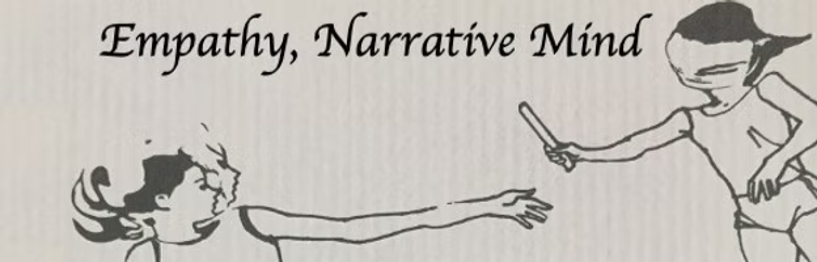
Based at Indiana University, the Experimental Humanities Lab combines empirical research with hermeneutics with the basis of empathy and narrative thinking. One of their most recent works focused on a large game of telephone to see what sticks in the retelling of stories.

The Neurohumanities Platform
Based at MIT, the Neurohumanities Platform focuses on the four following initiatives: “Concepts & Practices of Self-enhancement in Deep Time and Space; Neuroscience and Human Flourishing; AI Tools for Collective Awareness and Deep Communication; Public Literacies for Global Human Self-Enhancement”
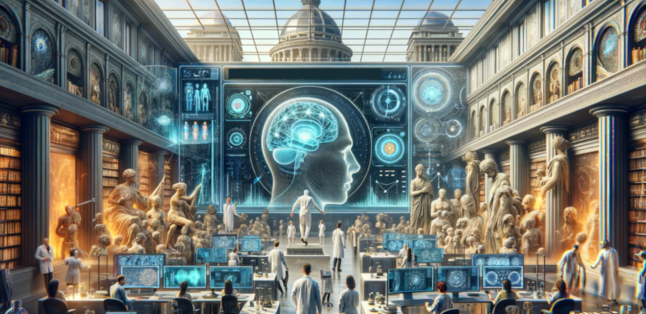
Venice Actions for Neurohumanities
Based in Venice, this lab focuses on digital humanities, using cognitive monitoring technologies to explore, “tangible and intangible cultural legacies with cutting-edge technology. The initiative serves as an incubator for project-oriented initiatives, fostering multidisciplinary collaboration, hands-on digitization, and the exchange of best practices within the Digital Humanities landscape. In this collaborative space, innovation meets tradition, shaping the future of Digital Humanities through a lens that is both technological and profoundly human.”

National Conference on Neurohumanities
This conference, based in Kristu Jayanti, India combines neuroscience, cognitive studies, literature, philosophy, and cultural studies to advance neurohumanities.
The Neurohumanities Lab is an interactive experience that uses computer systems and neuroscientific analyses through a Digital Humanities methodology using “eye movement trackers, facial recognition systems, motion tracking technologies, and infrared or thermal cameras.” The space “integrates knowledge from literature, linguistics, neuroscience, artificial intelligence and immersive technologies to foster human flourishing.”

A resource website that features interviews with scholars in the neurohumanities, including the interview questions asked and recorded interviews.